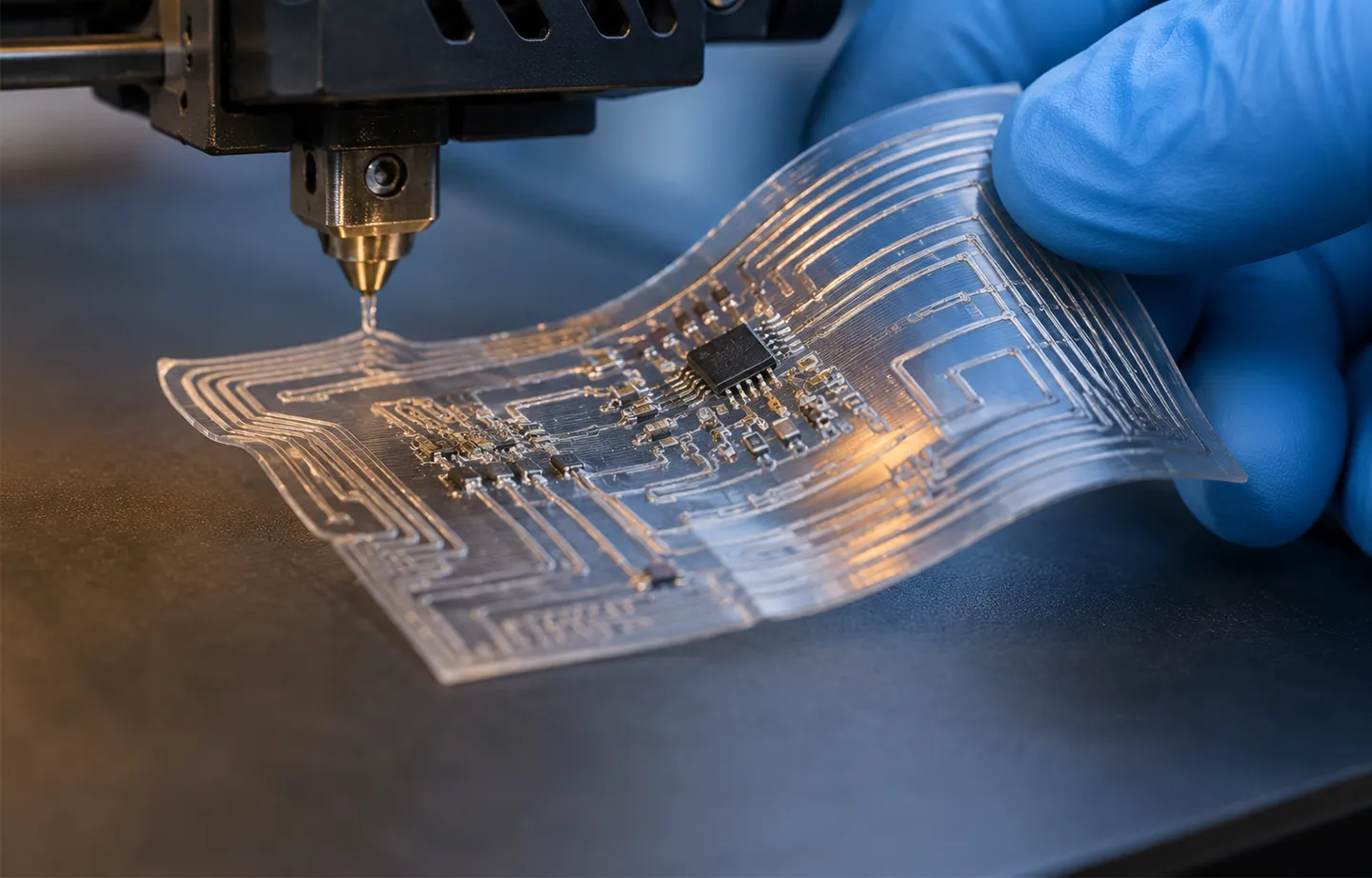

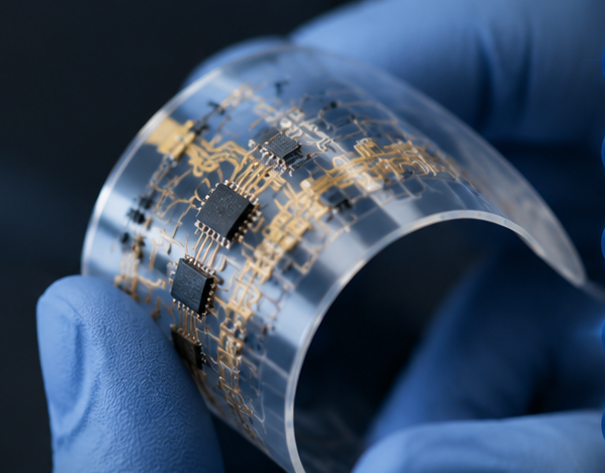
Flexible electronics represents a next-generation form factor for electronic systems, born from the convergence of advanced materials, microelectronics, and printed circuit technologies. By utilizing bendable and stretchable materials and structural designs, these systems ensure robust performance and efficient interaction within complex, dynamic environments.
In contrast to conventional rigid electronics, flexible systems offer significant advantages, including lightweight profiles, superior conformability, and excellent deformability. This allows them to adhere seamlessly to the human body or irregular surfaces, maintaining stable functionality even when subjected to bending, stretching, or dynamic strain. This characteristic makes flexible electronics a key enabling technology for high-growth sectors such as wearable devices, soft robotics, smart healthcare, and the Industrial Internet of Things (IIoT).
Driven by advancements in Electronic Skin (E-skin), multi-modal sensing, and intelligent systems, flexible electronics are evolving from discrete components into fully integrated "Sense-Compute-Communicate" platforms.

 Contact
 Quote
Quote  Account
  Cart
Cart 
 English